We may be quite different from one another in what we believe or don’t believe, but there’s a kind of reunion that happens every day around something we all want the same: children deserve a safe place where they can grow and have fun, and every territory needs spaces where people can rest from the rush of life. Sometimes it’s a soccer field, a square. A playground right on the main street. And these places need ongoing care.
In Sítio Conceiçãozinha, a partner territory of Instituto Elos in Guarujá, São Paulo, a local technology for collective care of shared spaces has even emerged. It’s when residents offer what they know best, and in return, everyone gains an improved version of the place they live in. The Guardians of the Territory is an invitation to daily cultivation of belonging through acts of care.
WHAT IS A PARTNER TERRITORY
Every year, Instituto Elos brings people from all over the world to live and learn its mobilization methodology through the GSA Program, an immersive experience of almost a month in the Baixada Santista region. There have been over 600 participants so far, from more than 70 countries.
The training is completed when everything learned is applied alongside local leaders from the partner territories. That’s the case of Sítio Conceiçãozinha, which hosted one of the 2024 program groups. Many collective dreams were born and materialized during those days, sparking transformations in spaces and relationships.
When the immersion ends, the work of Instituto Elos continues through technical support, helping to put into practice an action plan based on the community’s collective dreams for the future of the territory. That’s what’s happening there now—the context in which the Guardians of the Territory were born.
BELONGING IS AN ACTION
It’s embedded in the Elos Methodology, and it can also be found in the principles that guide the Guardians of the Territory: what is done collectively strengthens the sense of co-responsibility and the power of transformation. Put simply: I feel something is more mine when more of me is in it.
Priscila Pereira, GSA 2014 and facilitator at Instituto Elos in Conceiçãozinha, explains how this engagement through care happens in practice. It all began after the construction of the neighborhood’s first collective leisure space, created through community mutirões (collective work days). Once these spaces came to life, they needed to be cared for.
“The Praça dos Sonhos (Dream Square) became a place where people, especially children, wouldn’t leave for anything,” says Priscila, pointing out Dona Val as one of the most enthusiastic and committed caretakers.
“She lived next door and was very happy with the square. She took on the role of guardian and kept everything impeccable. But all that care also consumed her. When she faced health problems, the place was left without a reference for care,” says the facilitator, highlighting an important question: who takes care of those who take care in the territories?
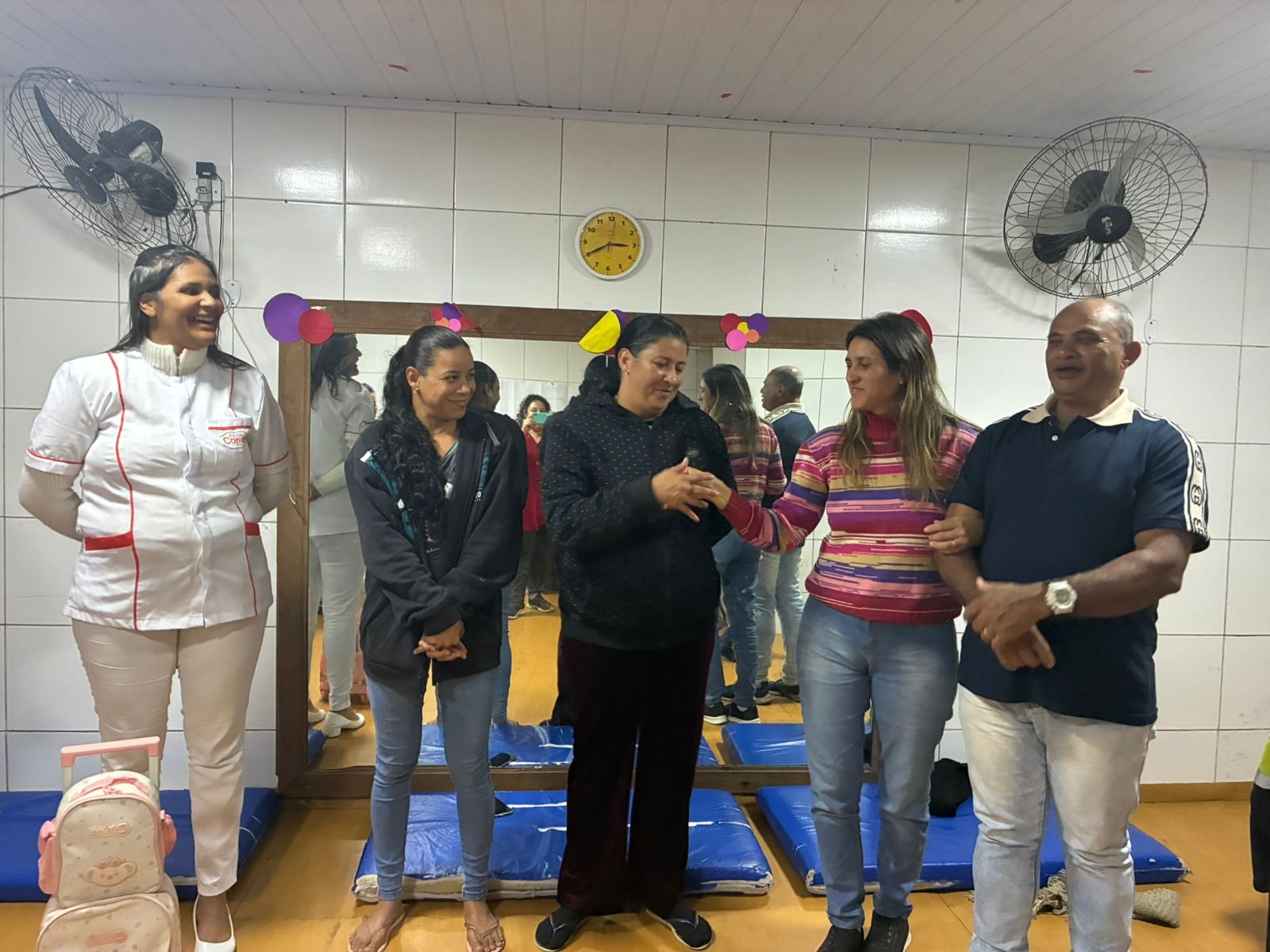
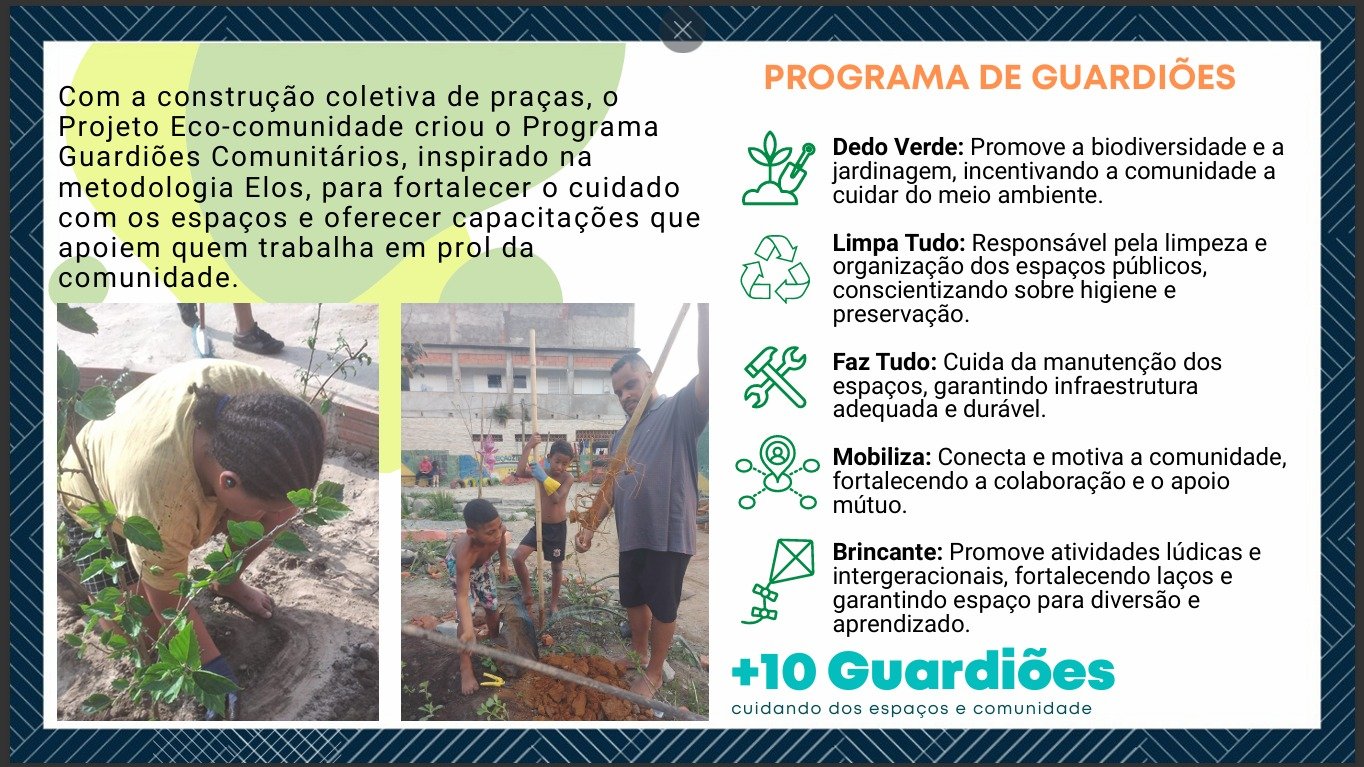
That’s when, Priscila explains, the idea was born to create what is now called the Guardians of Conceiçãozinha: a group of residents with different skills and talents who take turns caring for shared spaces. If someone loves plants, they take care of all the neighborhood’s gardens. If someone is good at painting, no wall will be left colorless from now on.
COME, BRING WHAT YOU KNOW
“I observed the spaces and their needs; from there, five types of guardians emerged. The idea was to create a program that engaged more people in recognizing our collective potential,” she says, while presenting the roles that were created: playmakers, fix-it-all, clean-it-all, green thumb, mobilizer, among others. Everything structured as a large community game.
“We defined the characters together during a workshop, using cards inspired by the manual of the ‘Oasis Game,’” which is an educational tool that brings the Elos Methodology to life for use by partner territories.
With ups and downs—because cultivating care is never easy—Priscila explains that the group remains committed to their roles and to the transformations taking place in the neighborhood. “We decided together, for example, that it’s necessary to clean the square three times a week and that the playmakers will hold activities with the children every fifteen days,” she explains.
And the rewards are not just symbolic—the feeling that we’re doing the right thing for ourselves. To further motivate the group, Priscila created an actual reward system. “Those who follow the agreements receive a monthly basic food basket and humanitarian coins to use at the EcoTroca store. It’s been working really well,” she concludes.